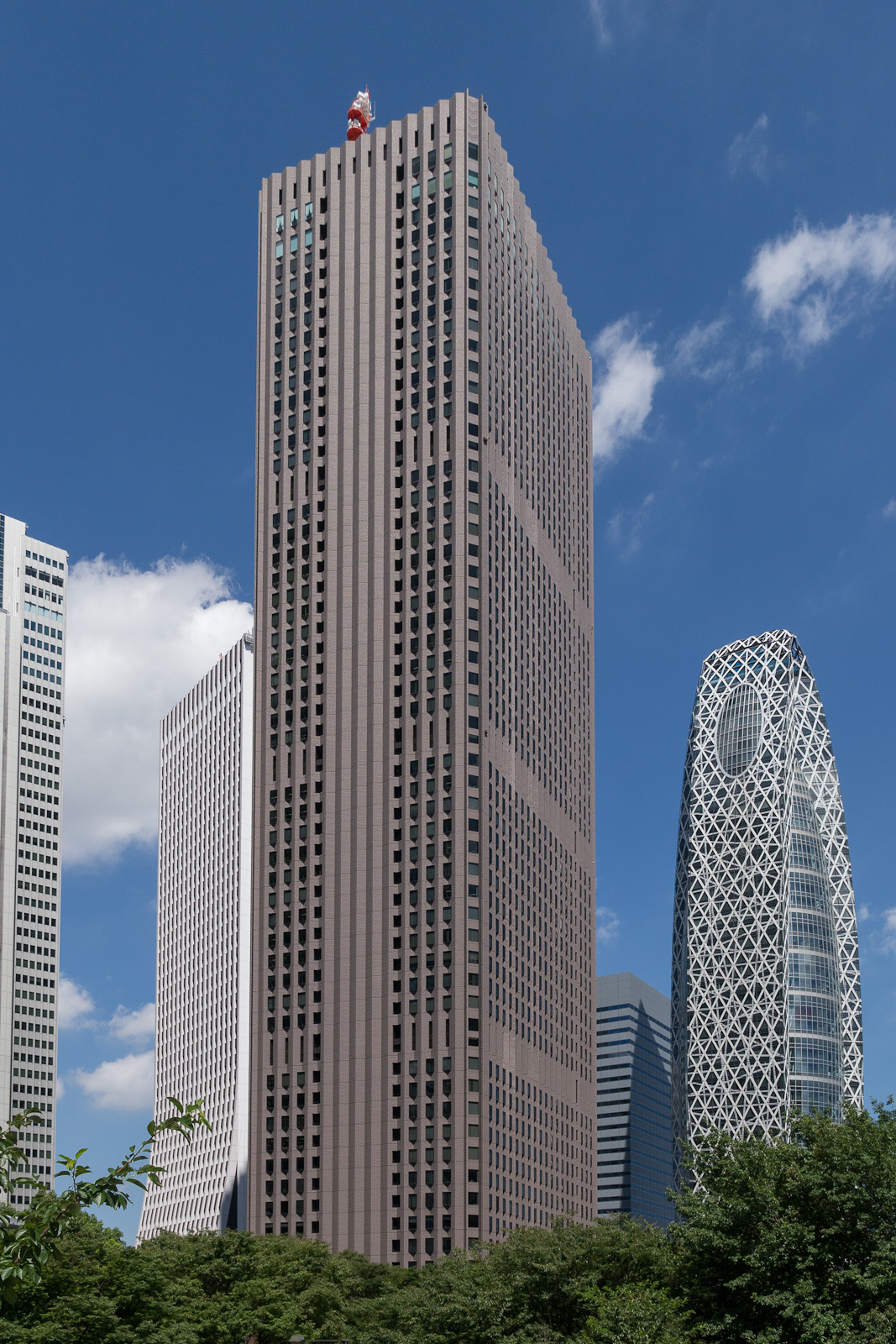
Keio Plaza Hotel Tokyo
Completed in 1971 with 47 stories and a height of 178 m, the Keio Plaza Hotel was the first skyscraper finished under the Shinjuku Subcenter Plan and held the title of the world's tallest hotel at the time of its opening.
18 articles tagged “Shinjuku City”
Completed in 1971 with 47 stories and a height of 178 m, the Keio Plaza Hotel was the first skyscraper finished under the Shinjuku Subcenter Plan and held the title of the world's tallest hotel at the time of its opening.
A 35-story, 166-meter office tower completed in 2011 in Kita-Shinjuku under a Tokyo Metropolitan Government–led urban redevelopment project, forming part of the Shinjuku Front Square complex together with an adjacent 20-story residential tower.
Completed in January 1995 with 44 stories and a height of approximately 189 m, Shinjuku i-Land Tower was developed by the Housing and Urban Development Corporation in the western fringe of Nishi-Shinjuku. Its plaza is home to Robert Indiana's iconic LOVE sculpture.
A 40-story, 195-meter mixed-use tower completed in 2011 along Ome Kaido in the outer zone of Nishi-Shinjuku, combining office floors and residential units in a single redevelopment project organized by a local land-readjustment association.
A 43-story, 200-meter office skyscraper completed in 1976 in Nishi-Shinjuku as the Yasuda Fire and Marine headquarters. Winner of the 19th BCS Award, it stands out for its curved facade among the predominantly grid-faced towers of West Shinjuku.

A 44-storey mixed-use tower completed in February 2010 in Nishi-Shinjuku, rising 167 metres beside Shinjuku Central Park. The lower seven floors are offices; floors eight through 44 house 842 rental homes operated under Sumitomo Realty's La Tour brand.
A 48-storey, 225-metre skyscraper completed in January 2023 in the heart of Kabukicho, Shinjuku. Containing a live music hall, theatre, cinema and two hotels but no office floors, it translates the entertainment character of the district into a vertical tower.
A 60-story residential skyscraper completed in 2017 through an urban redevelopment project in the Nishi-Shinjuku 5-chome district. Standing approximately 199 meters tall, it participates in the same skyline as Nishi-Shinjuku's established office towers.
A 55-story residential skyscraper completed in 2015 through an urban redevelopment project in Shinjuku's Tomihisa district. Built to replace a densely packed low-rise neighborhood, it now stands as one of the tallest towers in Shinjuku City.
The main venue for the 2020 Tokyo Olympics, completed in 2019 by a joint team including Kengo Kuma. Its eaves are clad in timber from all 47 Japanese prefectures, embodying the concept of a 'Forest Stadium'.
A 50-story educational skyscraper in Nishi-Shinjuku whose cocoon-shaped façade won the 2008 Emporis Skyscraper Award — the first time a Japanese building claimed the top prize.
A 52-story, 235-meter mixed-use skyscraper completed in 1994 in the Nishi-Shinjuku high-rise district. Designed by Kenzo Tange Associates, it houses the Park Hyatt Tokyo on its upper floors above a large office component.

A 54-story, 223-meter office building forming part of West Shinjuku's high-rise district.
A 55-story, 223-meter office building representative of the early years of West Shinjuku's high-rise district.

Recognizable by its crown, a 50-story, roughly 210-meter office building in West Shinjuku.
Known for its triangular floor plan, a 52-story, 210-meter office building in West Shinjuku.
Designed by Kenzo Tange, a 48-story, 243-meter government building rising over West Shinjuku.
Integrated with cultural facilities, a 54-story, roughly 234-meter mixed-use tower in Hatsudai.