Transport
Lines, stations, terminals and airports — the transport infrastructure that moves people and goods across Tokyo and the Kanto region.
Filter by area

Haneda Airport D Runway Ota City, Tokyo The fourth runway at Tokyo International Airport (Haneda), opened 21 October 2010. Its 2,500-metre surface at the mouth of the Tama River was built on a hybrid structure: a 520,000 m² steel-jacket pier section supported by 1,165 steel-pipe piles, combined with a reclaimed-island section.

Sotetsu/JR Direct Line Yokohama The Sotetsu/JR Direct Line opened 30 November 2019, linking Nishiya on the Sotetsu Main Line to Hazawa Yokohama-Kokudai via a 2.7-kilometre underground spur. The line gave Sotetsu its first direct route to central Tokyo, with trains reaching Shinjuku from Futakoikawa in around 44 minutes.
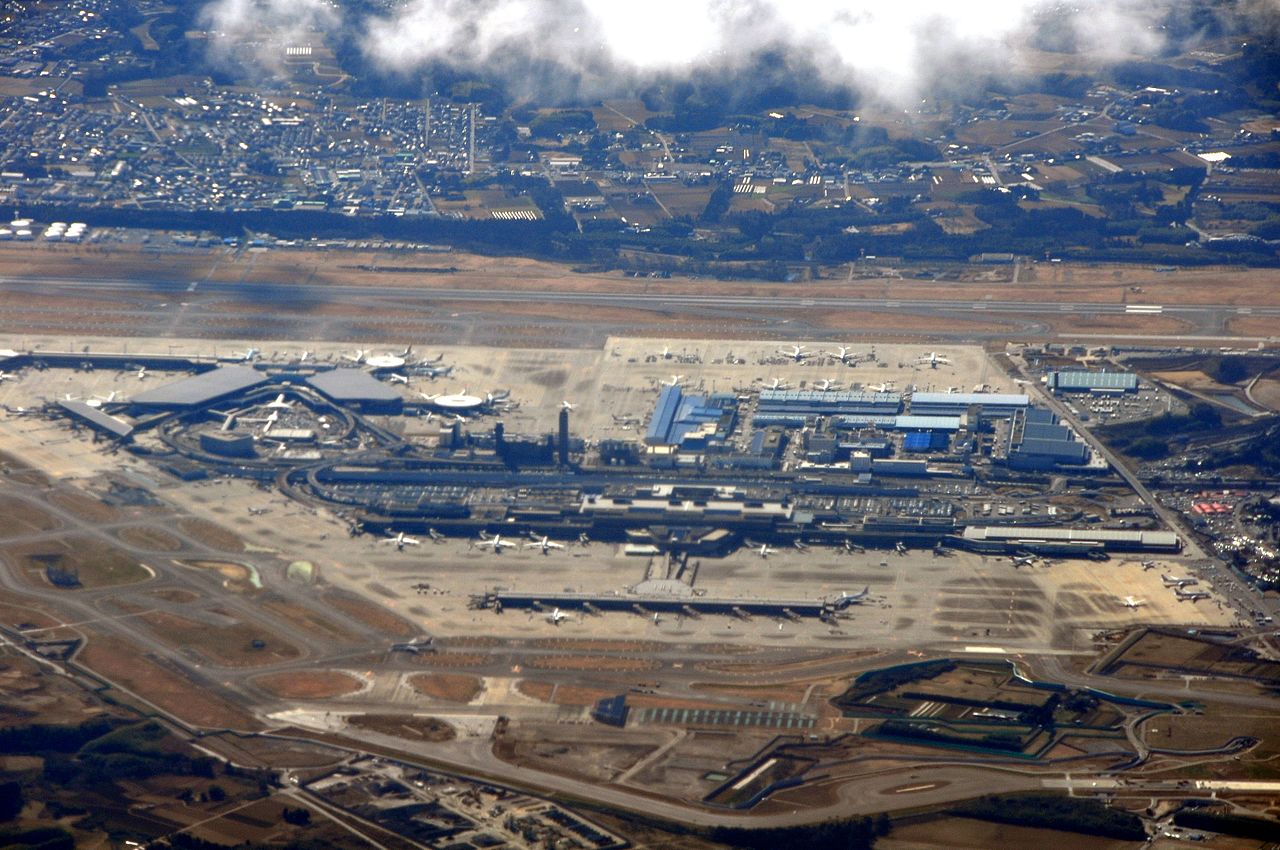
Narita Airport Terminal 3 Narita City An LCC-only terminal opened on 8 April 2015 at Narita International Airport. Designed by Nikken Sekkei with PARTY for creative direction and MUJI (Ryohin Keikaku) for interiors, the 66,000 m² four-storey building is defined by colour-coded running tracks on the floor that guide passengers to departures in blue and arrivals in red.

Ueno–Tokyo Line Ueno to Shinagawa A JR East route brand opened on 14 March 2015, linking Ueno and Tokyo stations with approximately 3.8 kilometres of new track. It restored through-services between the Utsunomiya, Takasaki and Jōban lines in the north and the Tōkaidō Line in the south — a connection severed for some 43 years.
Haneda Airport Access Line Minato City / Shinagawa City / Ota City JR East's planned railway link between Tokyo Station and Haneda Airport. The Higashi-Yamate Route reuses an existing freight branch while a new Access Line tunnel (approx. 5.0 km) extends to the airport terminals. The project targets a fiscal 2031 opening, cutting Tokyo Station–Haneda to around 18 minutes without a transfer.

Tokyu Toyoko / Minatomirai Line Through Service Shibuya / Yokohama On 1 February 2004, the Minatomirai Line (Yokohama–Motomachi-Chukagai, 4.1 km, 6 stations) opened alongside through-running service with the Tokyu Toyoko Line, making it possible to travel seamlessly from Shibuya to Yokohama's waterfront. In March 2013, Shibuya Station moved underground and through-running extended to the Tokyo Metro Fukutoshin Line.

Hokuriku Shinkansen (Kanazawa–Tsuruga Extension) Ishikawa and Fukui Prefectures An approximately 125-kilometre shinkansen extension that opened on 16 March 2024, adding six stations — Komatsu, Kaga-Onsen, Awara-Onsen, Fukui, Echizen-Takefu and Tsuruga — and bringing Fukui Prefecture into Japan's high-speed rail network. Tokyo–Fukui now takes as little as 2 hours 51 minutes.

Tokyo Metro Fukutoshin Line Shibuya to Wako-shi An underground railway that opened on 14 June 2008, linking Shibuya, Shinjuku-Sanchome and Ikebukuro — Tokyo's three main secondary centres — on a 20.2-kilometre, 16-station alignment from Shibuya to Wako-shi. Through-running with Tobu, Seibu and Tokyu lines connects Saitama to Yokohama without a transfer.

Chuo Shinkansen (Linear) Tokyo to Nagoya (to Osaka) A superconducting magnetic levitation railway planned to link Shinagawa and Nagoya across 286 kilometres in as little as 40 minutes at a top speed of 505 km/h. Around 86% of the route runs underground, including the Southern Alps Tunnel at depths up to approximately 1,400 metres. After Shizuoka Prefecture approved its section in July 2026, full-line construction moved forward; the earliest opening for the Shinagawa–Nagoya segment is now 2036.

Tokaido Shinkansen Tokyo to Shin-Osaka Opened in 1964 as the world's first high-speed railway, the artery linking Tokyo and Shin-Osaka. Its fare distance is 552.6 kilometres (the actual track is about 515), it now runs at up to 285 km/h, and the fastest Nozomi covers Tokyo to Shin-Osaka in 2 hours 21 minutes. It is the origin point of high-speed rail in Japan.

Nippori-Toneri Liner Nippori to Minumadai-shinsuikoen (Adachi) An automated people mover opened in 2008, linking Nippori and Minumadai-shinsuikoen over 9.7 kilometres and 13 stations. A driverless AGT system running on rubber tyres along a guideway, it filled the transit gap in western Adachi, where no railway had run before.

Rinkai Line Osaki to Shin-Kiba (Waterfront) The Tokyo Waterfront Area Rapid Transit line linking Osaki and Shin-Kiba over 12.2 kilometres. It serves the waterfront sub-centre — Odaiba, Tokyo Big Sight — and, since its full opening in 2002, runs through service with JR's Saikyo and Kawagoe lines from Osaki, joining the bay-side districts with Ikebukuro, Shinjuku, and Shibuya on a single ride.

Keikyu Shinagawa Station Lowering Project Minato City An unusual railway restructuring that will lower Keikyu's Shinagawa Station platforms from the second floor to ground level as part of a continuous grade-separation project along 1.7 km between Sengakuji and Shimbamba stations. Led by Tokyo Metropolitan Government, targeting completion in fiscal year 2029.

Keisei Skyliner Keisei-Ueno / Nippori to Narita Airport The airport express linking Keisei-Ueno and Nippori with Narita Airport. Running on the Narita Sky Access Line opened in 2010 at 160 km/h — the fastest of any conventional line in Japan — it connects Nippori and Airport Terminal 2 in as little as 36 minutes, cutting a journey that once took 51.
Ochanomizu Station and Hijiri Bridge Chiyoda City / Bunkyo City JR Ochanomizu Station, opened in 1904, and Hijiri Bridge — a 1927 post-earthquake reinforced-concrete arch spanning the Kandagawa gorge. The renovated Hijiribashi-guchi concourse opened in December 2023, completing a multi-year accessibility upgrade alongside a near-century-old civic landmark.

mAAch ecute Kanda-Manseibashi Chiyoda City A commercial facility opened in September 2013 inside the 1912 brick railway viaduct of the former Manseibashi Station, preserving the original arches, platform remains, and a staircase from 1912 while active Central Line trains pass directly overhead.

Sotetsu/Tokyu Shin-Yokohama Line Yokohama Two underground railway lines opened simultaneously on 18 March 2023 — the Tokyu Shin-Yokohama Line (Hiyoshi–Shin-Yokohama, 5.8 km) and the Sotetsu Shin-Yokohama Line (Nishiya–Shin-Yokohama, 6.3 km) — completing a through-running network spanning seven operators and fourteen lines across some 250 kilometres.

Toei Oedo Line A figure-eight through central Tokyo A Toei subway opened in full in 2000, running 40.7 kilometres across 38 stations. A linear-motor 'mini subway' with a small tunnel cross-section, it was built to run economically through the deep underground. Roppongi Station, about 42 metres down, is the deepest on the Toei network.

Toden Arakawa Line (Tokyo Sakura Tram) Arakawa City / Shinjuku City Tokyo's last surviving streetcar line, linking Minowabashi in Arakawa City to Waseda in Shinjuku across 12.2 kilometres and 30 stops. The line outlasted Tokyo's once-extensive tram network because most of its route runs on dedicated track, and has carried the nickname Tokyo Sakura Tram since 2017.

Tokyo Metro Marunouchi Line Ikebukuro to Ogikubo Opened in 1954, the second subway line in Tokyo after the Ginza Line. A main line runs from Ikebukuro through Tokyo and Shinjuku to Ogikubo, with a branch from Nakano-sakaue to Honancho — about 27 kilometres and 28 stations in all. It is known for its red cars and the stretches where it surfaces above ground.

Tsukuba Express Akihabara – Tsukuba Metropolitan Intercity Railway's line between Akihabara and Tsukuba, opened 24 August 2005. The 58.3-kilometre, 20-station route runs at up to 130 km/h, covering the distance in as little as 45 minutes. Built alongside a 3,300-hectare land-readjustment programme along its corridor, the line is one of Japan's closest examples of railway-led urban development.

Chuo Line Rapid Tokyo to Takao The orange-vermilion commuter line linking Tokyo Station and Takao over 53.1 kilometres. Tracing its origins to the Kobu Railway of 1889, it runs from the central business district out to the suburbs of the Tama area, and is known for one of the longest straight stretches on Tokyo's rail network.

Tokyo Monorail Hamamatsucho to Haneda Airport Japan's first airport railway, opened on 17 September 1964 — twenty-three days before the Tokyo Olympics. The straddle-beam ALWEG-system monorail runs 17.8 km across 11 stations from Monorail Hamamatsucho to Haneda Airport Terminal 2, now operated as a wholly owned subsidiary of JR East.

Yurikamome Shimbashi to Toyosu (Waterfront) An automated guideway transit line that opened between Shimbashi and Ariake in November 1995, crossing Rainbow Bridge to reach the Tokyo waterfront sub-centre. Extended to Toyosu in March 2006, the line now runs 14.7 km across 16 stations and has grown in step with the development of Odaiba and the Rinkai Fukutoshin.
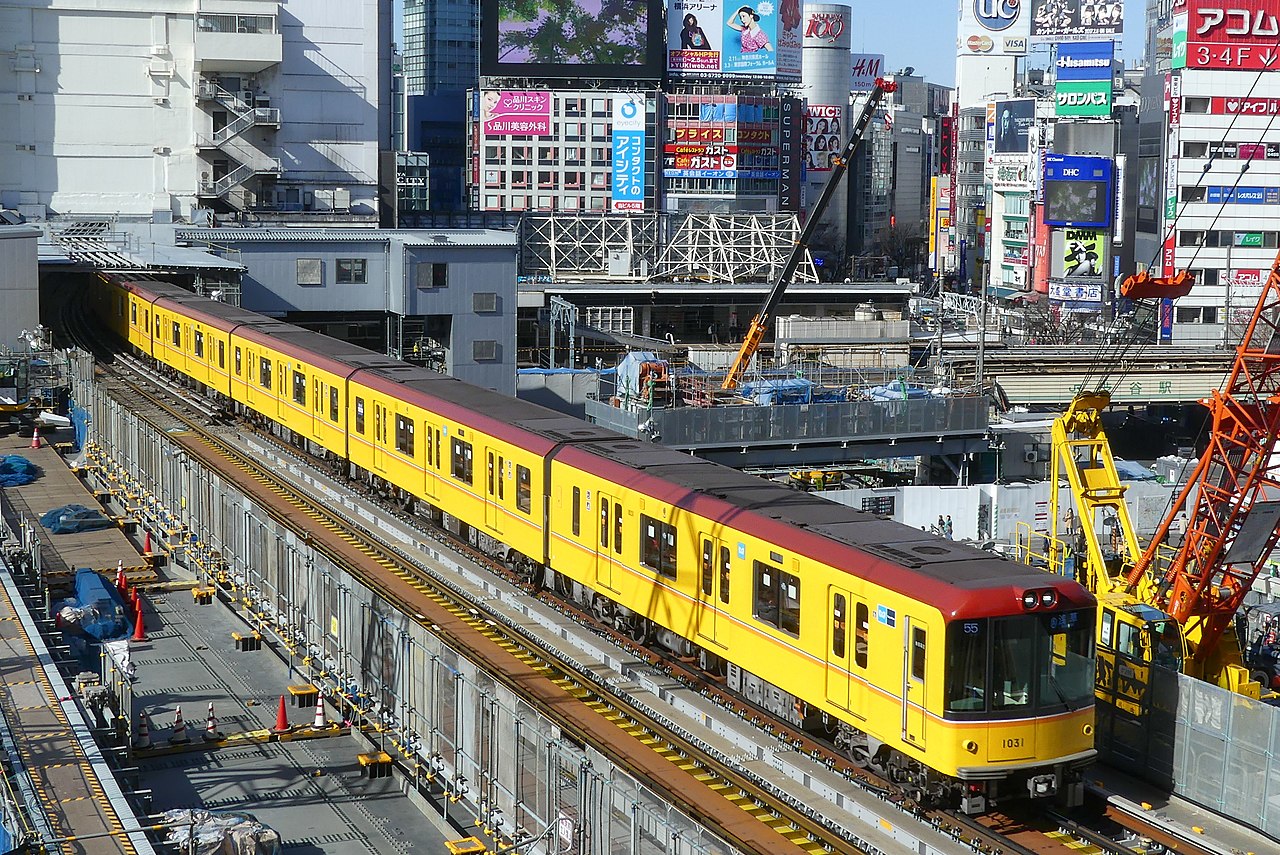
Tokyo Metro Ginza Line Asakusa to Shibuya Asia's first subway, opened on 30 December 1927 between Asakusa and Ueno, now running 14.2 km across 19 stations from Asakusa to Shibuya. The Ginza Line retains its original engineering — third-rail power at 600 V DC and standard-gauge track — largely unchanged since opening.

Yamanote Line Central Tokyo loop A 34.5-kilometre loop connecting 30 of Tokyo's core stations — Shibuya, Shinjuku, Ikebukuro, Ueno, Tokyo, Shinagawa — with a full circuit taking around 64 minutes. The loop service opened in 1925 and has defined the spatial structure of central Tokyo ever since.
Takanawa Gateway Station / Takanawa Gateway City Minato City Opened in March 2020 as a new stop on the Yamanote and Keihin-Tohoku lines, Takanawa Gateway Station features a dramatic origami-inspired roof designed by Kengo Kuma. It anchors the Takanawa Gateway City redevelopment — a 9.5-hectare project on a former JR depot site transforming the gap between Shinagawa and Tamachi.
Ueno Station Taito City Opened in 1883 and the main gateway to northeastern Japan for over a century, Ueno Station holds 22 platforms across three distinct levels — elevated, ground-level, and underground. Its dead-end ground-floor platforms, a legacy of the Ueno hillside hemming in the site, carry the quiet memory of all the terminus trains that once terminated here.

Shibuya Station Redevelopment Shibuya City Opened in 1885, Shibuya Station serves four operators across nine lines. Its bowl-shaped valley terrain — with platforms stacked across 30-plus metres of elevation — makes the ongoing reconstruction one of the most complex urban rail projects in Japan. Full completion is targeted for fiscal 2034.

Shinjuku Station Shinjuku City Opened in 1885, Shinjuku Station is served by five operators across 36 platforms and holds Guinness World Records certification as the world's busiest railway terminal. The Shinjuku Grand Terminal plan — anchored by a 48-storey tower and an east–west pedestrian deck — is under construction with the tower due in fiscal 2029.

Tokyo Station Marunouchi Building Chiyoda City A red-brick landmark opened in 1914, designed by Kingo Tatsuno. Designated an Important Cultural Property in 2003, it was restored in 2012 to its original three-story form with the south and north domes rebuilt.
Page 1 of 4